A company that does math for a living
Gurobi makes software that helps large companies with hard decisions, like how to plan a supply chain or run a power grid. Their website talks to two very different readers at once: executives who want results, and PhD researchers who want proof.
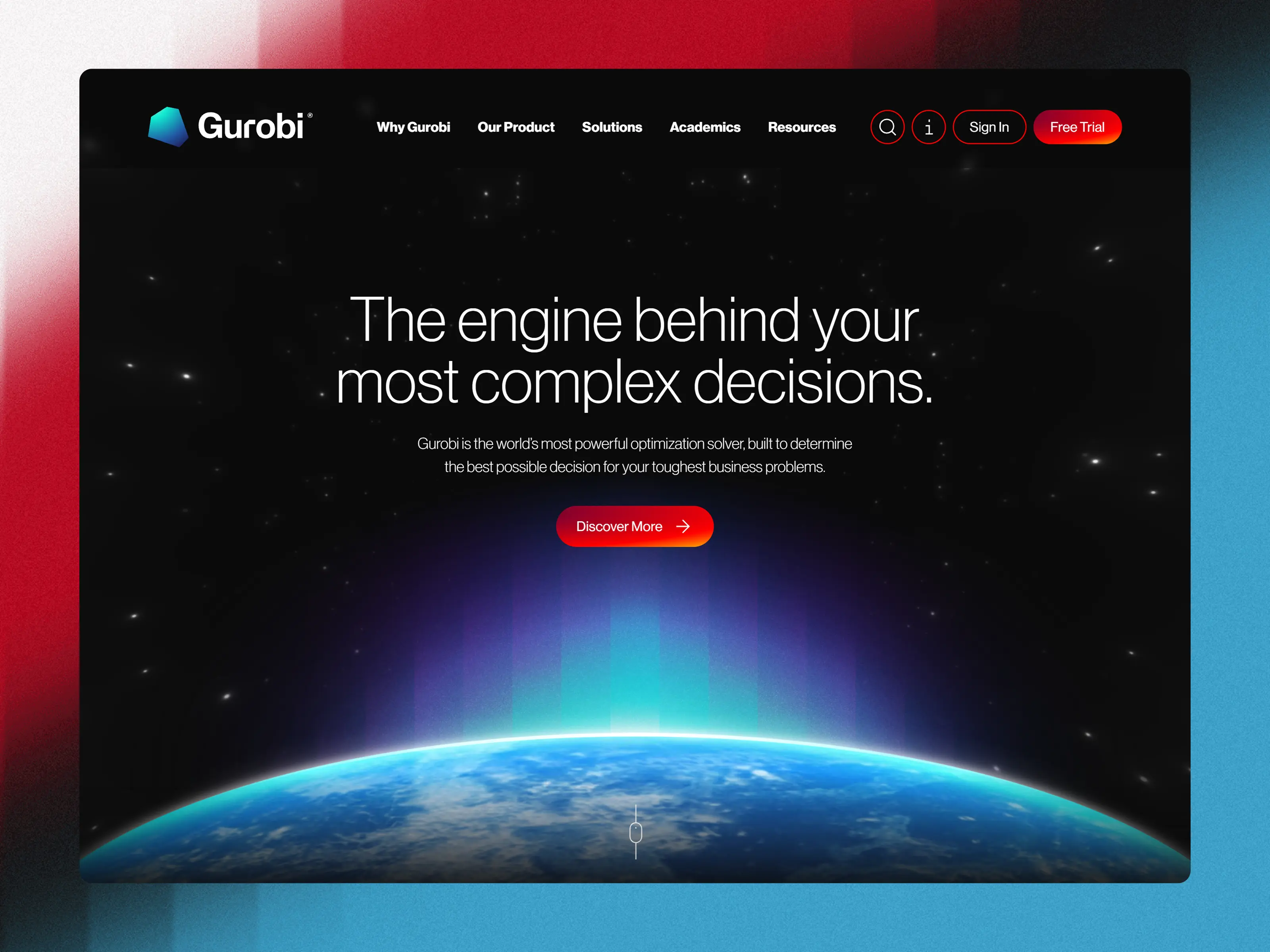
Every new page needed a developer
The site ran on WordPress. Gurobi wanted something more modern, but mostly they wanted control over their own pages. Launching a new one meant waiting on someone outside the team, even when it looked a lot like pages already live. For a company that sells optimal decisions, that setup wasn't one of them.
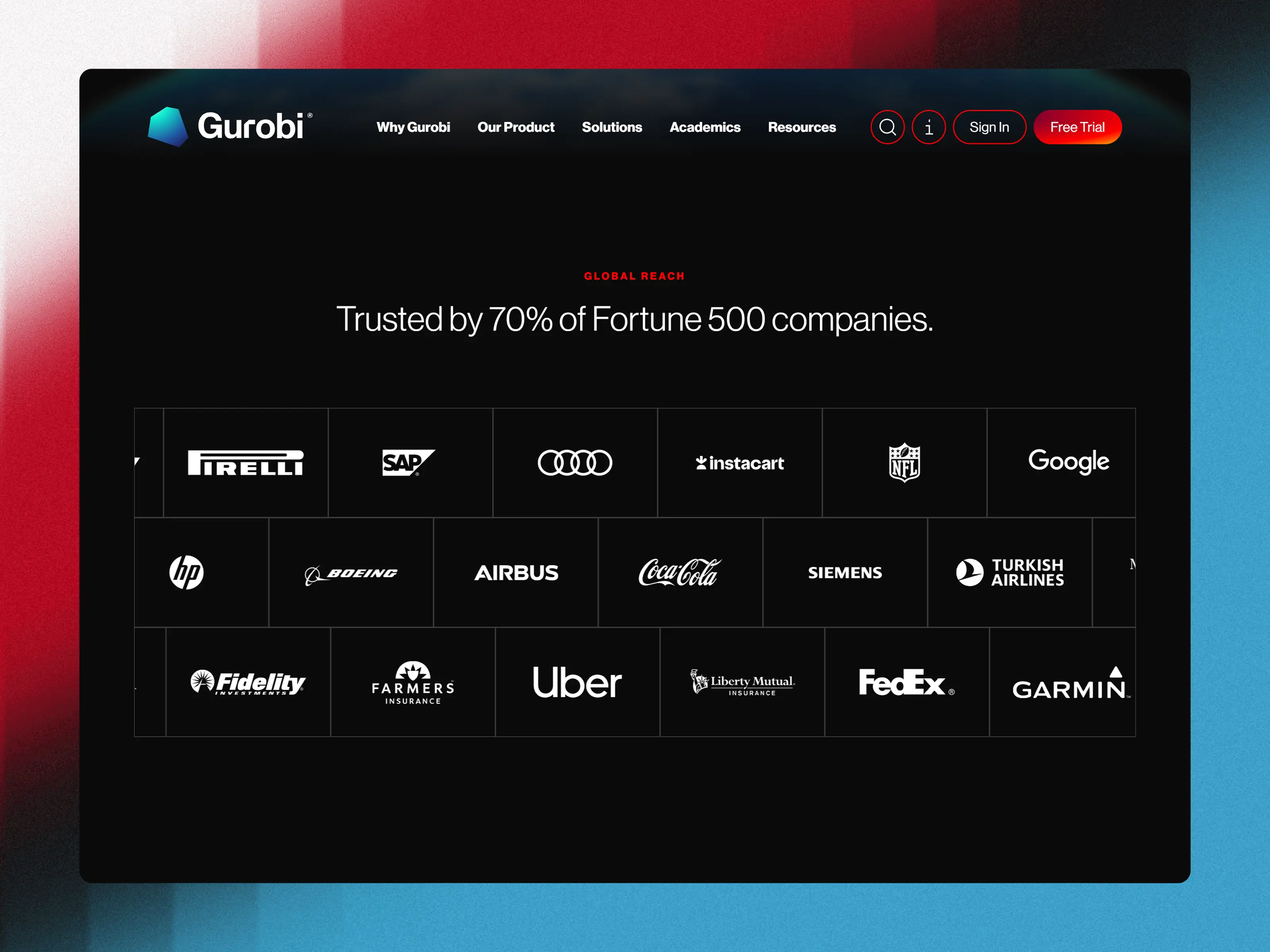
Building the pieces, then letting them build the pages
The design came to me finished in Figma. My job was to turn it into a Framer site that marketing could run on their own.
I broke the design down into a system of components: hero sections, case study blocks, industry grids and everything in between. Each one has the options the design allows, and no others. Marketing picks the sections they need, fills them in and puts them in order. The pages stay consistent because the components only bend in the directions the designers intended.
A few parts weren't in the Figma file at all. They only showed up once real content started landing on real pages, so I designed them myself and kept them in the same visual language as the rest.
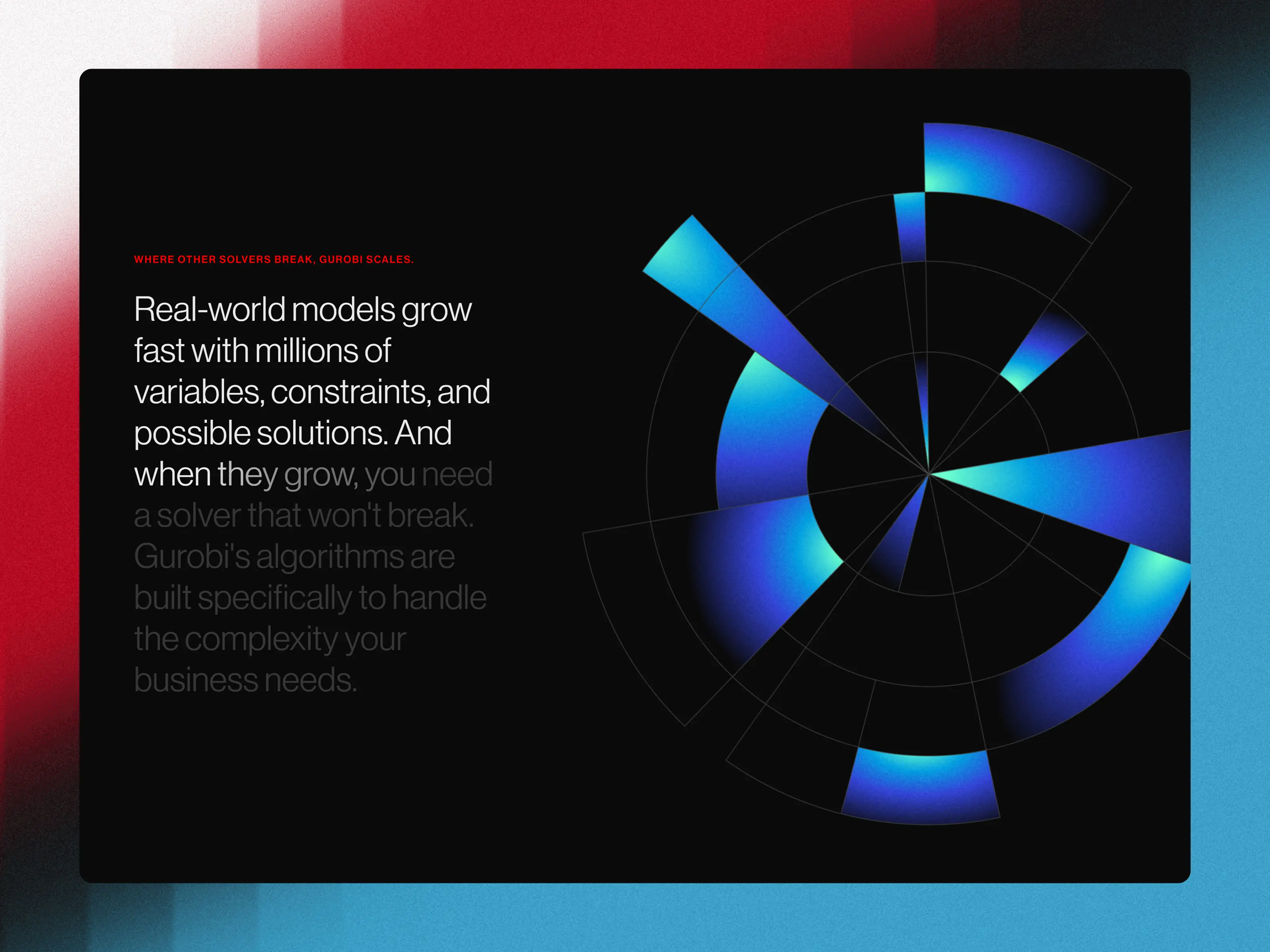
What changed
I handled the Framer build from start to finish over about three months. Today Gurobi's marketing team builds and publishes new pages themselves, without calling an external developer, and the design still looks like the design.